
Soccer isn’t just about fancy footwork and scoring goals; it’s a game of endurance, speed, and agility. Imagine sprinting like a cheetah while dodging defenders like a ninja. That’s where soccer fitness training comes in. It’s the secret sauce that turns average players into unstoppable forces on the field.
What Is Soccer Fitness Training?
Soccer fitness training focuses on enhancing physical attributes essential for success on the field. This training incorporates various exercises designed to improve endurance, speed, agility, and strength. Players engage in specific drills that simulate soccer movements, helping them adapt to game demands.
Endurance training forms a crucial component of soccer fitness training. Long-distance running or interval sprints builds aerobic capacity, ensuring athletes can maintain performance throughout matches. Speed drills, such as sprints and shuttle runs, enhance quickness, allowing players to react swiftly.
Agility training complements speed. Drills like cone drills and ladder exercises improve quick directional changes. Strength training, including bodyweight exercises and resistance training, builds muscle power crucial for shooting and tackling.
Specific exercises target the muscles commonly used in soccer. Squats build lower body strength, while core workouts enhance balance and stability. Flexibility workouts, such as dynamic stretching, prevent injuries and maintain range of motion.
Nutrition also plays a vital role in soccer fitness training. Proper hydration and balanced diets fuel intense training sessions and aid in recovery. Athletes should consume carbohydrates for energy, proteins for muscle repair, and fats for sustained endurance.
Incorporating these elements into a regular training routine significantly boosts player performance. Personalized training plans address individual player needs, ensuring optimal development. Regular assessments track progress, allowing for adjustments to maximize effectiveness.
Key Components of Soccer Fitness Training
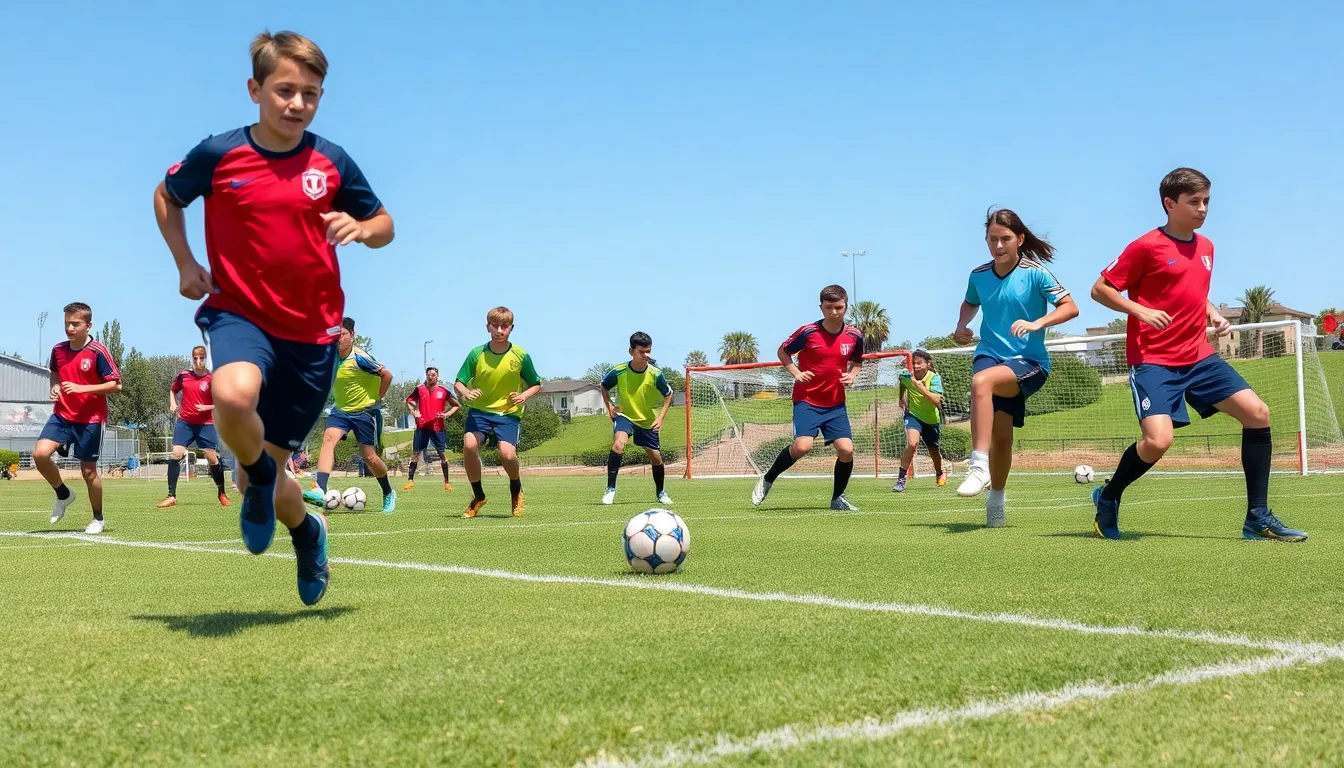
Soccer fitness training includes several essential components that enhance player performance. Focusing on various aspects ensures players excel in endurance, strength, flexibility, and overall agility.
Aerobic Conditioning
Aerobic conditioning strengthens a player’s cardiovascular system. Long-distance running helps build endurance, allowing players to sustain high-intensity efforts throughout a match. Incorporating interval sprints further boosts cardiovascular efficiency and mimics the stop-and-start nature of soccer. Training sessions can include time-based intervals, such as 30 seconds of sprinting followed by 60 seconds of recovery. Engaging in aerobic workouts three to four times weekly optimizes stamina and supports recovery.
Strength and Power Training
Strength and power training targets specific muscle groups used in soccer. Exercises like squats, lunges, and deadlifts build lower body strength, which enhances kicking power and stability. Upper body strength plays a role in shielding the ball and maintaining balance in physical confrontations. Plyometric exercises, such as box jumps, boost explosive power, vital for sprinting and jumping. Training should occur two to three times a week, focusing on functional movements to improve on-field performance.
Flexibility and Mobility
Flexibility and mobility are critical for injury prevention and effective movement. Stretching routines should include dynamic stretches before training and static stretches after workouts. Incorporating yoga or Pilates enhances core strength and improves overall body control. Mobility drills focusing on hips, ankles, and shoulders facilitate better range of motion. Regularly integrating flexibility training allows players to recover quicker and maintain peak performance throughout the season.
Designing a Soccer Fitness Training Program
A tailored soccer fitness training program enhances overall performance on the field. Essential components include assessment, skill training, and specific conditioning methods.
Assessing Individual Fitness Levels
Establishing baseline fitness levels is crucial. Each player has unique strengths and weaknesses. Conduct fitness assessments through standardized tests like the beep test for endurance and sprint tests for speed. Use results to identify areas needing improvement. Regular assessments track progress and adjust training plans. For example, if a player struggles with endurance, increasing aerobic conditioning can help. Personalized evaluations ensure that each athlete receives the optimal training support.
Incorporating Skill Training
Skill training complements physical conditioning in soccer. Techniques should focus on ball handling, passing accuracy, and shooting mechanics. Integrating drills that simulate game situations enhances decision-making skills. For instance, small-sided games encourage quick thinking and teamwork. Mix skill sessions with fitness drills to improve overall performance. Each practice should include technical challenges requiring agility and speed. Regular skill-focused sessions lead to better game readiness.
Common Mistakes in Soccer Fitness Training
Many players overlook warm-up routines. Skipping a proper warm-up can lead to injuries and decreased performance during training. Insufficient focus on flexibility can also hinder a player’s ability to perform at optimal levels. Stretching, both dynamic and static, plays a crucial role in preparing muscles for intense activity.
Another common error involves neglecting strength training. Players often prioritize cardio workouts over strength exercises, which can lead to imbalances. Incorporating strength routines, such as squats and lunges, is essential for enhancing overall athletic performance.
Players frequently disregard nutrition as well. Poor dietary choices can impede recovery and energy levels, impacting training efficiency. Prioritizing balanced nutrition ensures that players fuel their bodies adequately for intense activities on the field.
Dehydration is often underestimated. Failing to hydrate properly before, during, and after training sessions can result in fatigue and decreased performance. Encouraging regular fluid intake is vital for maintaining optimal energy levels.
Ignoring the importance of recovery is another frequent mistake. Players may push through fatigue without recognizing the value of rest. Implementing recovery strategies, such as adequate sleep and low-intensity activities, supports sustained performance.
Lastly, athletes often train without setting specific goals. Without targeted objectives, it becomes challenging to measure progress effectively. Establishing clear, achievable goals enables players to track their development and stay motivated throughout their training journey.
Soccer fitness training is essential for any player aiming to elevate their game. By focusing on endurance speed agility and strength players can develop the physical attributes necessary for success on the field. A well-structured training program that includes aerobic conditioning strength training and flexibility work will not only enhance performance but also reduce the risk of injuries.
Incorporating skill training and setting specific goals allows players to track their progress and stay motivated. With a commitment to personalized training plans and regular assessments players can unlock their full potential and become formidable athletes. Embracing a holistic approach to fitness and skill development will ultimately lead to greater success in soccer.

