
When it comes to fitness, the military takes it to a whole new level. Forget about yoga mats and gentle stretching; military fitness training is all about pushing limits, building strength, and maybe even doing a few burpees while contemplating life choices. It’s not just a workout; it’s a rite of passage that transforms civilians into warriors—minus the camo and the battlefield.
Overview of Military Fitness Training
Military fitness training focuses on enhancing physical capabilities through rigorous and demanding workouts. This form of training incorporates various exercises designed to build strength, endurance, and agility. Trainees often perform high-intensity interval training (HIIT), obstacle course runs, and functional movements to simulate real-life challenges.
Punishing push-ups, sit-ups, and sprints form part of the daily regimen. Trainees tackle cardiovascular drills that elevate heart rates and improve stamina quickly. Intentional goal setting ensures participants increase their physical limits continuously.
Team-oriented activities foster camaraderie among participants and enhance motivation. Working together, teams engage in relay races or group strength challenges that require collaboration and trust. Such teamwork develops not only fitness but also leadership skills essential for military success.
Despite the demanding nature, military fitness training offers mental benefits. Participants find improvements in focus, discipline, and stress management. Structured routines guide individuals in building resilience crucial for various life situations.
Trainees experience transformative changes, as military fitness training reshapes both body and mindset. Boosted confidence levels often emerge from meeting and overcoming challenges. Skills gained during this training extend beyond physical prowess, influencing overall performance in daily life.
Structured yet diverse, military fitness training prepares individuals for extreme challenges while fostering a sense of accomplishment. Adopting elements of this training can significantly improve personal fitness goals, irrespective of background.
Benefits of Military Fitness Training
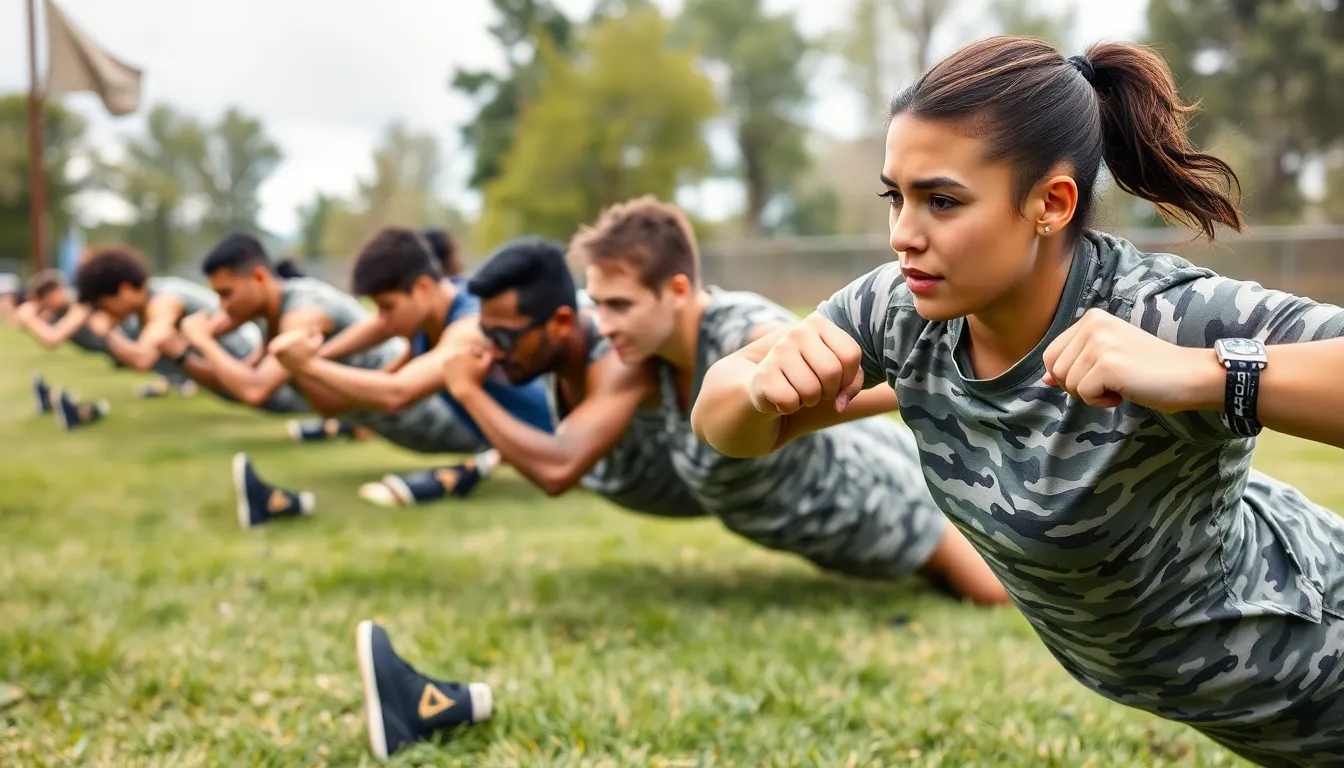
Military fitness training offers numerous benefits, enhancing both physical and mental capabilities. Participants gain strength and resilience through challenging regimens.
Physical Health Improvements
Physical health significantly improves through military fitness training. Cardiovascular endurance grows as individuals engage in high-intensity interval training. Strength levels increase due to rigorous workouts that involve bodyweight exercises and resistance training. Flexibility often enhances with diverse movements, promoting functional fitness. Weight management remains a key benefit, as participants burn calories efficiently during intense sessions. Injury prevention becomes easier, given that individuals develop a strong foundation through balanced training. Overall, military-style workouts focus on comprehensive physical enhancement, making them effective for all fitness levels.
Mental Resilience Development
Mental resilience develops through the structured nature of military fitness training. Consistent routines foster discipline and focus, critical for overcoming challenges. Participants learn to manage stress effectively, finding release through intensive workouts. Building resilience becomes a natural outcome, as individuals push beyond their limits. Coping strategies gained during training translate well into everyday life, adding to the overall experience. Confidence typically rises as accomplishments accumulate, reinforcing a strong mindset. Achieving personal goals in this environment leads to profound personal growth and mental fortitude.
Types of Military Fitness Training
Military fitness training encompasses various approaches that enhance physical performance and prepare individuals for demanding tasks. Training focuses on endurance, strength, and combat readiness.
Endurance Training
Endurance training concentrates on enhancing stamina through prolonged physical activity. Activities like running, swimming, and cycling are staples in this training type. Sessions typically include long-distance runs or timed sprints aiming to push cardiovascular limits. Participants often engage in high-intensity interval training to develop both aerobic and anaerobic capacity. This approach not only boosts endurance but also promotes mental toughness and resilience, integral traits for military readiness.
Strength and Conditioning
Strength and conditioning involves exercises that build muscle strength, power, and overall physical fitness. Bodyweight exercises such as push-ups, pull-ups, and squats form the foundation of strength routines. Weight training, utilizing resistance equipment, complements bodyweight movements to enhance muscular endurance. Participants benefit from structured workouts that target specific muscle groups to improve overall functional fitness. Improved strength supports injury prevention while enhancing performance in various physical tasks essential for military operations.
Combat Readiness
Combat readiness training prepares individuals for the physical and mental challenges of combat scenarios. This type focuses on skills and strategies necessary for real-world applications. Drills may include tactical movements, obstacle courses, and simulated combat situations. Emphasis on quick decision-making and adaptability during high-pressure scenarios fosters mental agility while improving physical capabilities. Those engaged in combat readiness training experience a comprehensive approach that cultivates teamwork, discipline, and leadership skills crucial in military settings.
Techniques and Methods
Military fitness training employs various techniques and methods to maximize physical and mental capabilities. Two prominent methods include high-intensity interval training (HIIT) and functional movements.
High-Intensity Interval Training (HIIT)
HIIT stands as a cornerstone of military fitness. This training method alternates short bursts of intense activity with recovery periods. Participants often engage in exercises like sprinting, burpees, or kettlebell swings during these intervals. Research demonstrates that HIIT significantly improves cardiovascular endurance and burns fat effectively. Each session typically lasts 20 to 30 minutes, maximizing efficiency while delivering powerful results. Individuals at any fitness level can adapt HIIT workouts to their abilities, making this approach both versatile and adaptable. Quick-paced workouts foster camaraderie, pushing trainees to motivate one another during challenging drills.
Functional Movements
Functional movements form another critical component of military fitness training. These exercises replicate real-life activities, enhancing overall body mechanics. Key movements include squats, lunges, and push-ups, which build strength and improve coordination. Training focuses on compound movements that engage multiple muscle groups, supporting injury prevention. Individuals experience enhanced physical performance in demanding scenarios by developing functional fitness. The emphasis on adaptability ensures that trainees can perform daily tasks more efficiently. Incorporating these movements into regimens helps foster agility and balance, essential for overcoming obstacles and challenges encountered in military settings.
Military fitness training offers a unique and powerful approach to personal fitness. Its blend of physical challenges and mental fortitude cultivates resilience and discipline. Participants not only enhance their physical capabilities but also develop skills that extend into everyday life.
The rigorous routines and team-oriented activities create a supportive environment that fosters camaraderie and motivation. As individuals push their limits, they uncover newfound confidence and strength.
This comprehensive training method proves effective for anyone looking to achieve their fitness goals while embracing a transformative experience. The benefits of military fitness training resonate far beyond the gym, equipping individuals with the tools to tackle life’s challenges head-on.

